
Self Heal Seeds
Heal-All is edible and medicinal, can be used in salads, soups, stews, or boiled as a pot herb. Used as an alternative medicine for centuries on just about every continent in the world, and for just about every ailment known to man, Heal-All is something of a panacea, it does seem to have some medicinal uses that are constant. The plants most useful constituents are Betulinic-acid, D-Camphor, Delphinidin, Hyperoside, Manganese, Oleanolic-acid, Rosmarinic-acid, Rutin, Ursolic-acid, and Tannins. The whole plant is medicinal as alterative, antibacterial, antipyretic, antiseptic, antispasmodic, astringent, carminative, diuretic, febrifuge, hypotensive, stomachic, styptic, tonic, vermifuge and vulnerary. A cold water infusion of the freshly chopped or dried and powdered leaves is a very tasty and refreshing beverage, weak infusion of the plant is an excellent medicinal eye wash for sties and pinkeye. It is taken internally as a medicinal tea in the treatment of fevers, diarrhoea, sore mouth and throat, internal bleeding, and weaknesses of the liver and heart. Clinical analysis shows it to have an antibacterial action, inhibiting the growth of pseudomonas, Bacillus typhi, E. coli, Mycobacterium tuberculi, which supports its use as an alternative medicine internally and externally as an antibiotic and for hard to heal wounds and diseases. It is showing promise in research for cancer, AIDS, diabetes, and many other maladies.
This information is collected from sites such as Altnature.com
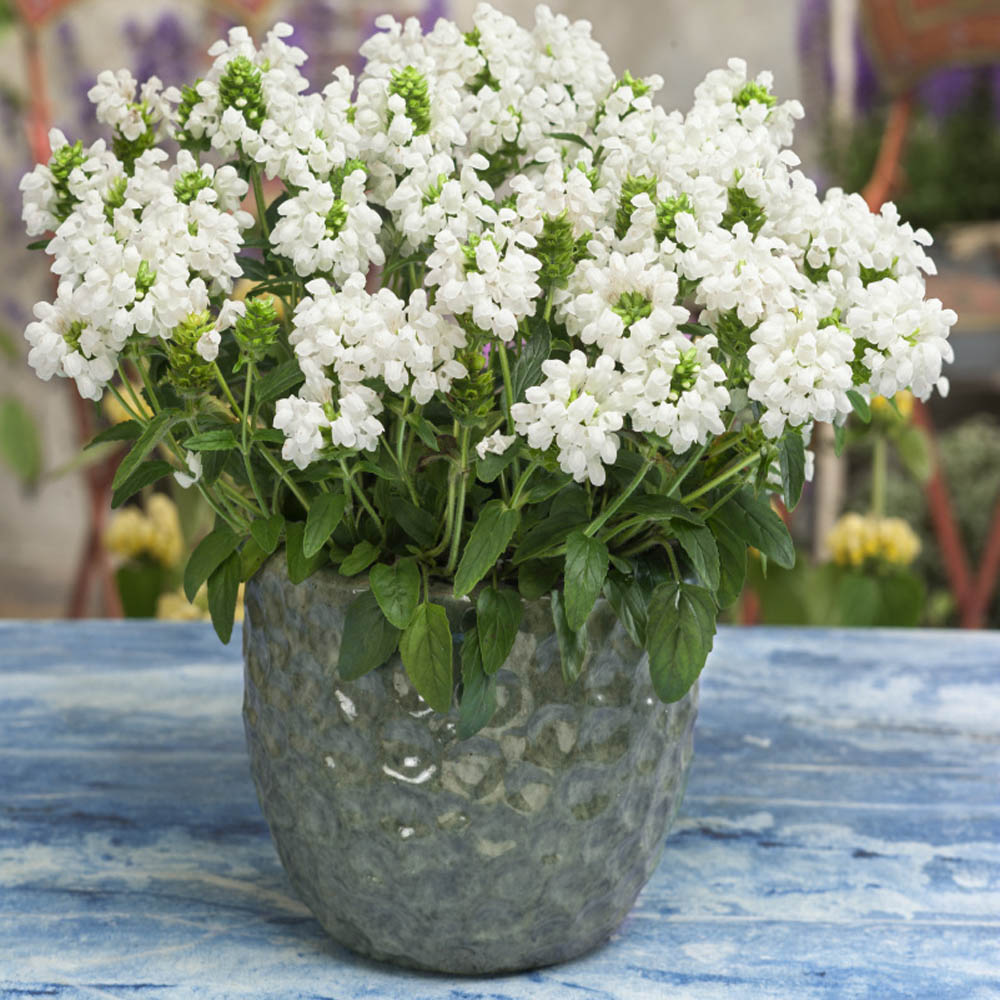
Also known as Heal-All, Common Selfheal, or Carpenter's Herb, is a charming perennial herb admired for its attractive purple flower spikes, low-growing habit, and long history in traditional herb gardens. Native to much of North America, Europe, and Asia, this adaptable plant thrives in a variety of conditions and is valued both as an ornamental groundcover and as a useful herb.
Throughout summer, Self Heal produces dense spikes of violet-purple flowers that attract bees, butterflies, and other beneficial pollinators. Its compact growth habit makes it an excellent choice for containers, herb gardens, pollinator plantings, and naturalized landscapes.
Easy to grow and highly adaptable, Self Heal provides season-long beauty while supporting local pollinator populations.
Uses- Beautiful purple flowers attract bees, butterflies, and beneficial insects.
- Excellent addition to pollinator and wildlife gardens.
- Useful as a low-growing ornamental groundcover.
- Suitable for herb gardens and educational plant collections.
- Attractive in containers, borders, and cottage gardens.
- Long history of cultivation in traditional herb gardens.
Self Heal grows very well in containers and hanging baskets where its compact, spreading habit can be appreciated. Choose a container at least 10–12 inches wide with good drainage and use a quality potting mix.
Plants perform best in full sun to partial shade. In warmer climates, afternoon shade can help keep plants lush and attractive. Keep soil evenly moist but not waterlogged. Once established, Self Heal is relatively low maintenance and may bloom for an extended period with regular watering.
Deadheading spent flowers can encourage additional blooming and keep plants looking tidy throughout the season.
Germination Instructions- Sow seeds on the surface of moist seed-starting mix.
- Press seeds lightly into the soil but do not bury deeply.
- Light aids germination.
- Maintain temperatures of 65–75°F (18–24°C).
- Keep soil evenly moist during germination.
- Seeds typically germinate in 10–21 days.
- Transplant seedlings once they are large enough to handle.
- Botanical Name: Prunella vulgaris
- Common Name: Self Heal, Heal-All
- Plant Type: Perennial Herb
- Height: 6–18 inches
- Spread: 12–24 inches
- Sun Exposure: Full Sun to Partial Shade
- Water Requirements: Moderate
- Soil: Average, well-draining soil
- USDA Zones: 4–9
- Container Size: 10–12 inches minimum diameter
Flowers and leafy stems may be harvested during the blooming season. Cut stems in the morning after dew has dried and use fresh or dry for later use. Harvesting encourages fresh growth and can help prolong flowering.
For drying, bundle stems loosely and hang in a warm, well-ventilated location away from direct sunlight until completely dry.
Why Grow Self Heal?Self Heal combines ornamental beauty, pollinator value, and ease of cultivation in one versatile perennial herb. Its vibrant purple flowers, compact growth habit, and adaptability to containers make it an excellent choice for gardeners seeking a plant that is both attractive and beneficial. Whether grown in herb gardens, patio containers, or pollinator landscapes, Self Heal provides reliable performance and season-long interest.
Note: These seeds need to be cold statified before sowing for best germination.
We recommend using the Seedman's Cold Stratification Kits for cold stratification.

Prunella x webbiana 'Blue Spider' is a charming, low-growing perennial groundcover prized for its unusual whorls of bright blue to blue-purple flowers. Compact, tidy, and easy to enjoy, this attractive self-heal variety brings a soft natural look to borders, rock gardens, containers, cottage gardens, and pollinator plantings.
Plants form a spreading mat of attractive foliage, staying low while sending up colorful flower spikes from late spring into summer. The blooms are especially appealing to bees, butterflies, and other beneficial pollinators, making 'Blue Spider' a useful choice for gardeners who want beauty and wildlife value in a small space.
This hardy perennial performs well in full sun to partial shade and prefers well-drained soil. Once established, it is easy to maintain and can be lightly trimmed after flowering to encourage a neat appearance. Its compact habit also makes it excellent for edging pathways, filling gaps between taller perennials, or softening the front of flower beds.
- Botanical Name: Prunella x webbiana 'Blue Spider'
- Common Name: Blue Spider Self-Heal
- Plant Type: Hardy perennial groundcover
- Flower Color: Blue to blue-purple
- Bloom Season: Late spring through summer
- Height: About 6 to 8 inches
- Light: Full sun to partial shade
- Uses: Groundcover, borders, rock gardens, containers, pollinator gardens, cottage gardens
- Pollinator Value: Attracts bees, butterflies, and beneficial insects
Prunella 'Blue Spider' is a wonderful choice for gardeners looking for a dependable, compact flowering perennial with vivid blue blooms and excellent pollinator appeal.
Note: These seeds need to be cold statified before sowing for best germination.
We recommend using the Seedman's Cold Stratification Kits for cold stratification.
A perennial for zones 4-9.

Contact Us | Privacy Policy | About Us
| Returns
Serving gardeners since 1992
State of Mississippi Seedmen's Permit #C-391, Ohio 90152, Minnesota 20086777