
Bottlebrush Plant Seeds
Grow bottlebrush plants for their beautiful, long-lasting, bottle-brush-shaped flowers that attract beneficial pollinators like hummingbirds and butterflies. They are also easy to care for, being very drought and salt tolerant once established, and are non-toxic to humans and animals. You can grow them as shrubs, trees, or even in pots, with dwarf varieties available. Bottlebrush plants (Callistemon spp.) get their name from the spikes of flowers that bloom at the ends of the stems, bearing a strong resemblance to a bottle brush. Grow them as shrubs or small trees that grow up to 15 feet. Most bottlebrush varieties bloom over a long summer season
Bottlebrush plants need a very mild climate. If you live in an area cooler than USDA plant hardiness zones 8b through 11, grow bottlebrush in pots that you can move to a protected area for winter. Use a rich, peaty potting soil with a few handfuls of sand added to improve the drainage. If pruned hard every year, the plants will grow in pots as small as 6 to 8 inches in diameter. If you plan to let the shrub grow, you will need a large tub.
Bottlebrushes make excellent garden plants. Plants are all woody shrubs which range from dwarf plants to tall shrubs 10-12 feet tall. The flowers can be spectacular and are irresistible to nectar-feeding birds and insects.
Plants can be lightly pruned after flowering to keep them in shape. A low-phosphorous fertiliser should be applied in spring and autumn. Mulching will help retain soil moisture and reduce weed growth.
Germinating Bottlebrush Seeds
We have found that sowing seeds on surface of good seed starting mix that been pre-wetted, then covering container with plastic ( we prefer a plastic dome ), and placing container in a spot that will receive bright light, but not direct sunlight works best.
Keep seed starting mix moist until seeds germinate by misting, then remove plastic after you seed seeds germinating.
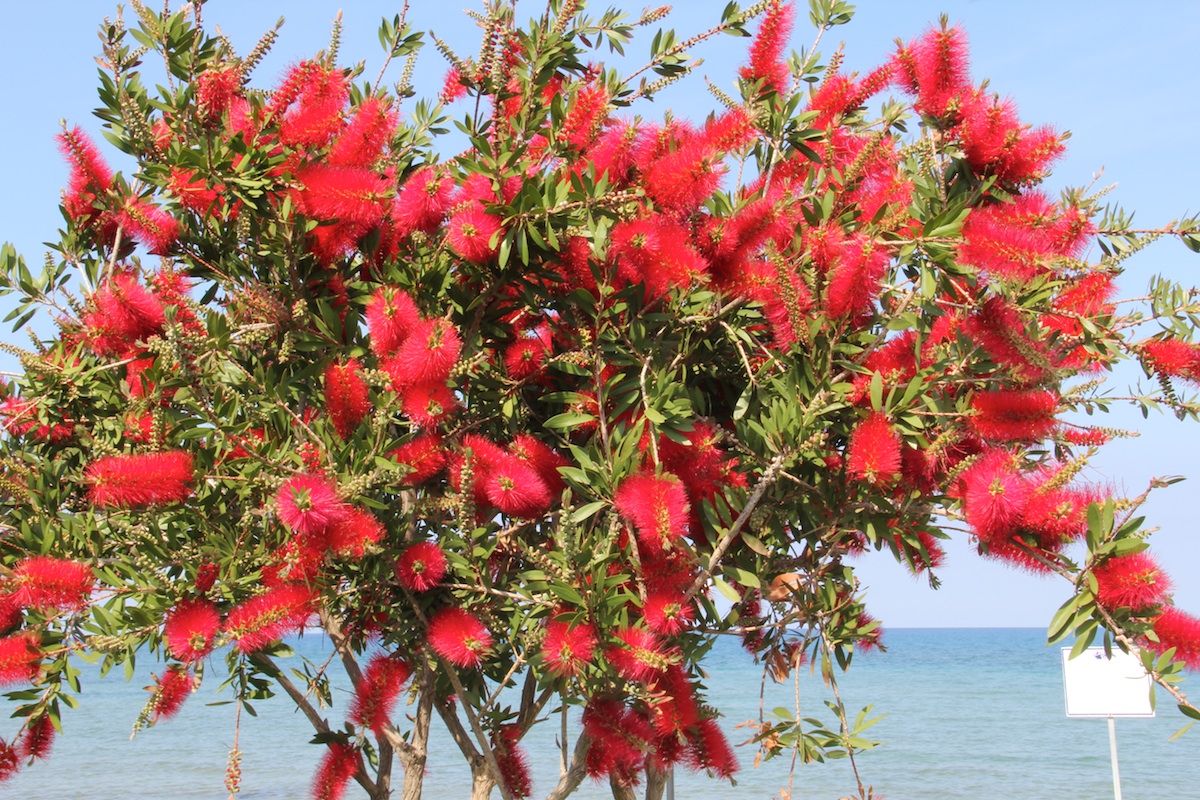
Landscape Rating: ⭐⭐⭐⭐⭐ (5/5 Stars)
Plant CharacteristicsCrimson Bottlebrush is one of the most colorful and easily recognized flowering shrubs or small trees in the landscape. Native to Australia, this evergreen ornamental is famous for its brilliant crimson flower spikes that closely resemble old-fashioned bottle brushes.
Mature plants typically reach 10 to 20 feet in height with a rounded, graceful form. The narrow, aromatic leaves release a pleasant citrus fragrance when crushed, giving rise to the species name citrinus.
Throughout spring and often again during summer and fall, the branches become covered with striking red flower spikes composed of hundreds of bright stamens. These vivid blooms create a dramatic display against the rich green foliage.
As a specimen lawn plant, Crimson Bottlebrush provides year-round beauty, colorful blooms, and excellent wildlife value.
Landscape Uses- Specimen lawn shrub or small tree
- Foundation plantings
- Pollinator gardens
- Hummingbird gardens
- Mediterranean landscapes
- Coastal gardens
- Accent plantings
- Drought-tolerant landscapes
Its vibrant flowers make it an exceptional focal point where bold color is desired.
Important Landscape NoteCrimson Bottlebrush performs best in full sun. Bright sunlight encourages heavier flowering and denser growth, producing the spectacular bloom displays for which the plant is famous.
Germination Information- Sow seeds on the soil surface or lightly cover.
- Use a well-drained seed-starting mix.
- Maintain temperatures between 70-80°F.
- Keep evenly moist but not waterlogged.
- Provide bright light.
- Germination generally occurs within 2-6 weeks.
- Botanical Name: Callistemon citrinus
- Plant Type: Evergreen Shrub or Small Tree
- USDA Zones: 8-11
- Sun Exposure: Full Sun
- Mature Height: 10-20 Feet
- Mature Spread: 8-15 Feet
- Growth Rate: Moderate
- Soil Preference: Well-drained soils
- Water Requirements: Low to Moderate
Crimson Bottlebrush tolerates heat, drought, humidity, and coastal conditions once established. It is highly adaptable and relatively low maintenance.
Container GrowingCrimson Bottlebrush performs very well in large containers and patio planters. Container-grown specimens can provide years of colorful flowering while remaining easy to manage.
Pollinator & Wildlife ValueThe nectar-rich flowers are highly attractive to hummingbirds, butterflies, honeybees, and other beneficial pollinators.
When in bloom, the plant often becomes one of the busiest pollinator destinations in the landscape.
Historical & Cultural SignificanceNative to Australia, Bottlebrush plants have been cultivated around the world for well over a century. Their unusual flowers and dependable performance have made them among the most popular Australian ornamentals ever introduced.
The genus name Callistemon comes from Greek words meaning "beautiful stamens," a perfect description of the spectacular flowers.
Today, Bottlebrush trees are widely planted throughout warm regions of North America, Europe, and Asia.
Botanical Facts- Member of the Myrtle Family (Myrtaceae).
- Native to Australia.
- Produces distinctive bottlebrush-shaped flowers.
- Leaves release a citrus scent when crushed.
- Excellent hummingbird plant.
- Highly tolerant of heat and drought.
Crimson Bottlebrush combines brilliant color, easy care, and outstanding pollinator value. Few landscape plants provide such a dramatic floral display while remaining so adaptable and dependable.
Additional Seedman NoteWhen a mature Crimson Bottlebrush reaches peak bloom, the plant can appear covered with hundreds of glowing red brushes suspended among the foliage. The flowers are so rich in nectar that hummingbirds and bees may visit continuously throughout the day, making this one of the most rewarding flowering landscape plants for wildlife enthusiasts.
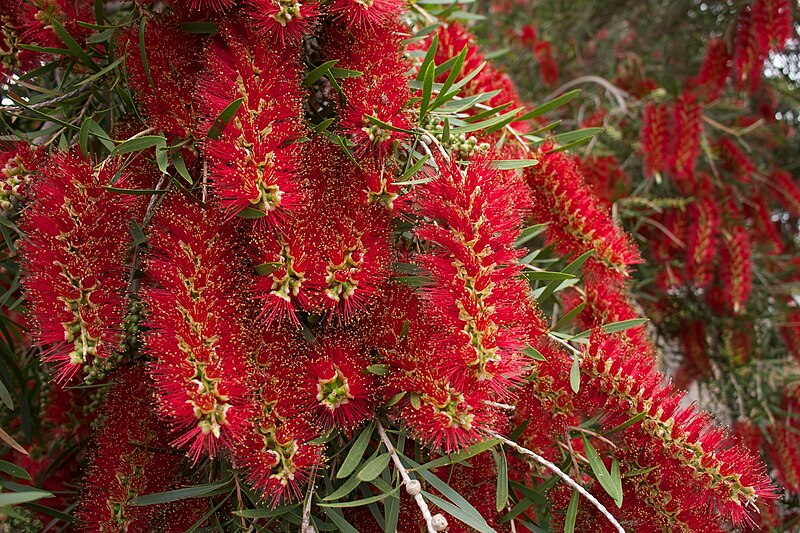
Landscape Rating: ⭐⭐⭐⭐⭐ (5/5 Stars)
Plant CharacteristicsCaptain Cook Bottlebrush is a spectacular ornamental selection of the famous Weeping Bottlebrush. Native to Australia, this compact cultivar is treasured for its graceful cascading branches, brilliant crimson flower spikes, and long blooming season.
Mature plants typically reach 6 to 12 feet in height with a similar spread, making them ideal for lawn specimens, foundation plantings, and accent gardens. The slender, arching branches create an elegant fountain-like appearance that remains attractive throughout the year.
The brilliant scarlet-red flower spikes emerge repeatedly from spring through summer and often continue into fall. The blooms resemble oversized bottle brushes and stand out dramatically against the fine-textured evergreen foliage.
As a specimen lawn plant, Captain Cook offers exceptional color, graceful form, and year-round landscape appeal.
Landscape Uses- Specimen lawn shrub or small tree
- Foundation plantings
- Accent landscapes
- Hummingbird gardens
- Pollinator gardens
- Coastal landscapes
- Mediterranean gardens
- Container specimens
The naturally weeping habit creates a soft, elegant appearance that contrasts beautifully with more upright landscape plants.
Important Landscape NoteCaptain Cook performs best in full sun, where it develops the heaviest flowering displays and maintains its dense, attractive growth habit.
Germination Information- Sow seeds on the soil surface or lightly cover.
- Use a well-drained seed-starting mix.
- Maintain temperatures between 70-80°F.
- Keep evenly moist.
- Provide bright light.
- Germination generally occurs within 2-6 weeks.
- Botanical Name: Callistemon viminalis var. 'Captain Cook'
- Plant Type: Evergreen Shrub or Small Tree
- USDA Zones: 8-11
- Sun Exposure: Full Sun
- Mature Height: 6-12 Feet
- Mature Spread: 6-10 Feet
- Growth Rate: Moderate
- Soil Preference: Well-drained soils
- Water Requirements: Low to Moderate
Once established, Captain Cook demonstrates excellent tolerance to drought, heat, humidity, and coastal conditions. It is a dependable performer in a wide variety of landscape settings.
Container GrowingThis cultivar performs exceptionally well in large decorative containers and patio planters. The naturally compact size and graceful branching habit make it one of the finest Bottlebrush selections for container culture.
Pollinator & Wildlife ValueThe nectar-rich flowers attract hummingbirds, butterflies, honeybees, and numerous native pollinators. During peak bloom, the plant often becomes a center of pollinator activity.
Birds also benefit from the shelter provided by its dense evergreen canopy.
Historical & Cultural SignificanceCallistemon species have become some of Australia's most widely recognized ornamental plants. The Captain Cook selection was developed to provide a more compact growth habit while retaining the spectacular flowering performance of the larger Weeping Bottlebrush.
The cultivar's name honors the famous British explorer Captain James Cook, whose voyages helped introduce knowledge of Australia's remarkable plant life to the wider world.
Today it remains one of the most popular ornamental bottlebrush selections for home landscapes.
Botanical Facts- Member of the Myrtle Family (Myrtaceae).
- Derived from Australia's Weeping Bottlebrush.
- Produces brilliant crimson flower spikes.
- Features a graceful cascading growth habit.
- Excellent hummingbird plant.
- Evergreen in warm climates.
Captain Cook Bottlebrush combines vivid color, graceful architecture, and exceptional wildlife value. Its compact size and long blooming season make it one of the finest ornamental bottlebrush selections for modern landscapes.
Additional Seedman NoteWhen in full bloom, the cascading branches of Captain Cook become draped with hundreds of glowing crimson flower spikes. The effect resembles red fireworks frozen in midair, creating one of the most eye-catching flowering displays available among small landscape trees and specimen shrubs.

Landscape Rating: ⭐⭐⭐⭐⭐ (5/5 Stars)
Plant CharacteristicsWeeping Bottlebrush is one of Australia's most elegant flowering trees. Renowned for its graceful cascading branches and brilliant crimson flower spikes, this evergreen ornamental combines year-round beauty with exceptional adaptability and wildlife value.
Mature specimens typically reach 15 to 30 feet in height with an equally broad spread. The long, pendulous branches create a fountain-like canopy that gently sways in the breeze, giving the tree its distinctive weeping appearance.
Throughout spring and summer—and often intermittently throughout the year in warm climates—the branches become covered with vibrant red bottlebrush-shaped flowers. These unusual blooms consist of hundreds of bright stamens that create one of the most recognizable floral displays in the landscape.
Its dramatic form and colorful flowers make Weeping Bottlebrush an outstanding specimen lawn tree and one of the finest flowering ornamentals for warm regions.
Landscape Uses- Specimen lawn tree
- Accent tree
- Pollinator gardens
- Hummingbird landscapes
- Mediterranean gardens
- Coastal plantings
- Water-wise landscapes
- Estate gardens
The naturally graceful shape makes it particularly effective as a standalone focal point where its unique architecture can be fully appreciated.
Important Landscape NotePlant Weeping Bottlebrush where its cascading branches have room to develop naturally. Minimal pruning allows the tree to achieve its most attractive fountain-like form.
Germination Information- Sow seeds on the surface or lightly cover with fine soil.
- Use a well-drained seed-starting medium.
- Maintain temperatures between 70-80°F.
- Keep evenly moist.
- Provide bright light.
- Germination generally occurs within 2-6 weeks.
- Botanical Name: Callistemon viminalis
- Plant Type: Evergreen Flowering Tree
- USDA Zones: 8-11
- Sun Exposure: Full Sun
- Mature Height: 15-30 Feet
- Mature Spread: 15-25 Feet
- Growth Rate: Moderate to Fast
- Soil Preference: Well-drained soils
- Water Requirements: Low to Moderate
Weeping Bottlebrush tolerates heat, humidity, drought, and coastal conditions exceptionally well. Once established, it becomes a remarkably dependable landscape specimen.
Container GrowingYoung plants can be grown successfully in large containers, though mature specimens develop into beautiful landscape trees best suited for permanent planting.
Pollinator & Wildlife ValueThe nectar-rich flowers attract hummingbirds, butterflies, honeybees, and numerous beneficial insects. During flowering season, the tree often becomes one of the most active pollinator destinations in the garden.
Birds also utilize the dense weeping canopy for nesting and shelter.
Historical & Cultural SignificanceNative to eastern Australia, Weeping Bottlebrush has become one of the most widely cultivated Australian ornamental trees in the world. Its adaptability and spectacular flowers have earned it a place in gardens across warm regions on multiple continents.
The genus name Callistemon translates to "beautiful stamens," perfectly describing the tree's brilliant flowers.
Its distinctive appearance has made it one of the most recognizable symbols of Australian ornamental horticulture.
Botanical Facts- Member of the Myrtle Family (Myrtaceae).
- Native to eastern Australia.
- Produces brilliant red bottlebrush-shaped flowers.
- Features naturally weeping branches.
- Excellent hummingbird and pollinator plant.
- Evergreen in warm climates.
Weeping Bottlebrush offers an exceptional combination of graceful architecture, brilliant flowers, and outstanding wildlife value. Few flowering trees provide such dramatic year-round beauty while remaining so easy to grow.
Additional Seedman NoteWhen a mature Weeping Bottlebrush reaches peak bloom, the cascading branches appear draped with hundreds of glowing crimson flower spikes. Combined with the elegant weeping canopy, the effect resembles a living waterfall of red blossoms, making this one of the most striking ornamental trees available for warm-climate landscapes.

Contact Us | Privacy Policy | About Us
| Returns
Serving gardeners since 1992
State of Mississippi Seedmen's Permit #C-391, Ohio 90152, Minnesota 20086777