
Spinach Seeds
Grow spinach for its exceptional nutritional value, containing high levels of iron, calcium, vitamins A, C, and E, and minerals like potassium and magnesium. It's a fast-growing, versatile, cool-season crop that can be grown by beginners in containers, raised beds, or the ground. Regular harvesting encourages continuous production, and its ability to tolerate partial shade and grow in spring, fall, and even over winter makes it a rewarding choice for many gardeners.
Fresh spinach seed germinates readily at 38-40F and
may be planted with good results when soil temperatures are 50
to 60 F. Higher temperatures reduce seed germination. Soil
temperatures above 85 F will inhibit seed germination. Spinach
seed rapidly loses viability. Fresh seed should be purchased
each year. Spinach should be planted in rows 1 to 2 feet apart.
The seed should be placed 1/2 inch deep and planted to have one
plant every 3 to 4 inches after thinning.
Spinach requires a soil pH of 6.0 - 6.5 and will not grow well
if pH is below 6.0. Indications of possible soil pH problems
include poor seed germination, yellowing and browning of the
margins and tips of seedling leaves, browning of roots, and
generally slow growth or death of the plants. If soil pH is too
high, leaves may show a generalized yellowing or chlorosis.
Spinach is adapted to a range of soil types, from light and
sandy to silty clay loams. In heavier soils, spinach should be
grown on raised beds to improve drainage for the shallow-rooted
plants. Seedling damping off can be reduced by use of raised
beds. After seeding, the soil should be kept uniformly moist.
When irrigating the garden, apply water in the morning so that
the foliage is dry before dark. Apply sufficient water to
moisten the soil to a depth of six inches. A uniform supply of
soil moisture is required to produce high quality, tender
spinach.
Spinach growth starts slowly and then accelerates during the
final 21 days before harvest. If a soil test has not been
taken, broadcast 5-10-10 fertilizer at 30 pounds per 1,000
square feet before planting. Spinach should be side-dressed
once during the growing season with ammonium nitrate at 1 pound
per 100 feet of row or calcium nitrate at 2 pounds per 100 feet
of row. A total of approximately 150 lb/A of actual N is
recommended, usually applied 1/2 preplant and 1/2 as a
broadcast application 3-4 weeks after seeding. Spinach requires
fairly high boron (B). Most soils in Nebraska supply adequate
boron for spinach. Spinach plants can become stunted with dark
roots and small, flattened, yellow leaves when boron is
deficient. An application of 1 pound of boron (10 lb/A of
borax) broadcast before seeding should eliminate the problem in
subsequent years. NEVER use boron unless needed and then only
in the recommended amounts. Boron is highly toxic to many other
garden plants including snap beans, cucumbers, peas and
strawberries.
Emergence rate varies depending upon soil temperature; time
from planting to harvest also is highly temperature dependent.
Generally, most varieties can be harvested 45 to 50 days after
planting. Spinach can be harvested from the time the plants
have five to six leaves until just before seedstalk
formation.
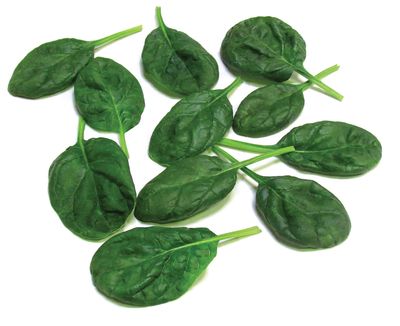
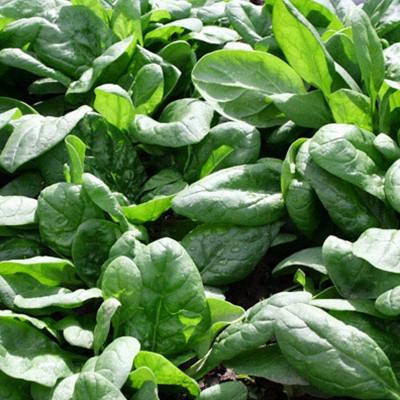
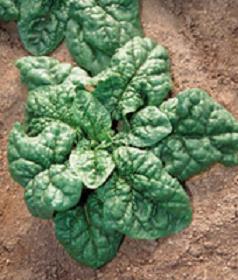
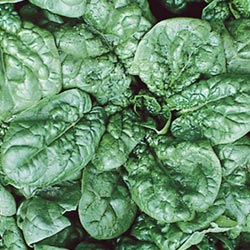
Semi-Savoy, upright, dark green, all season, good heat, mildew, and bolt resistance, 40 days.
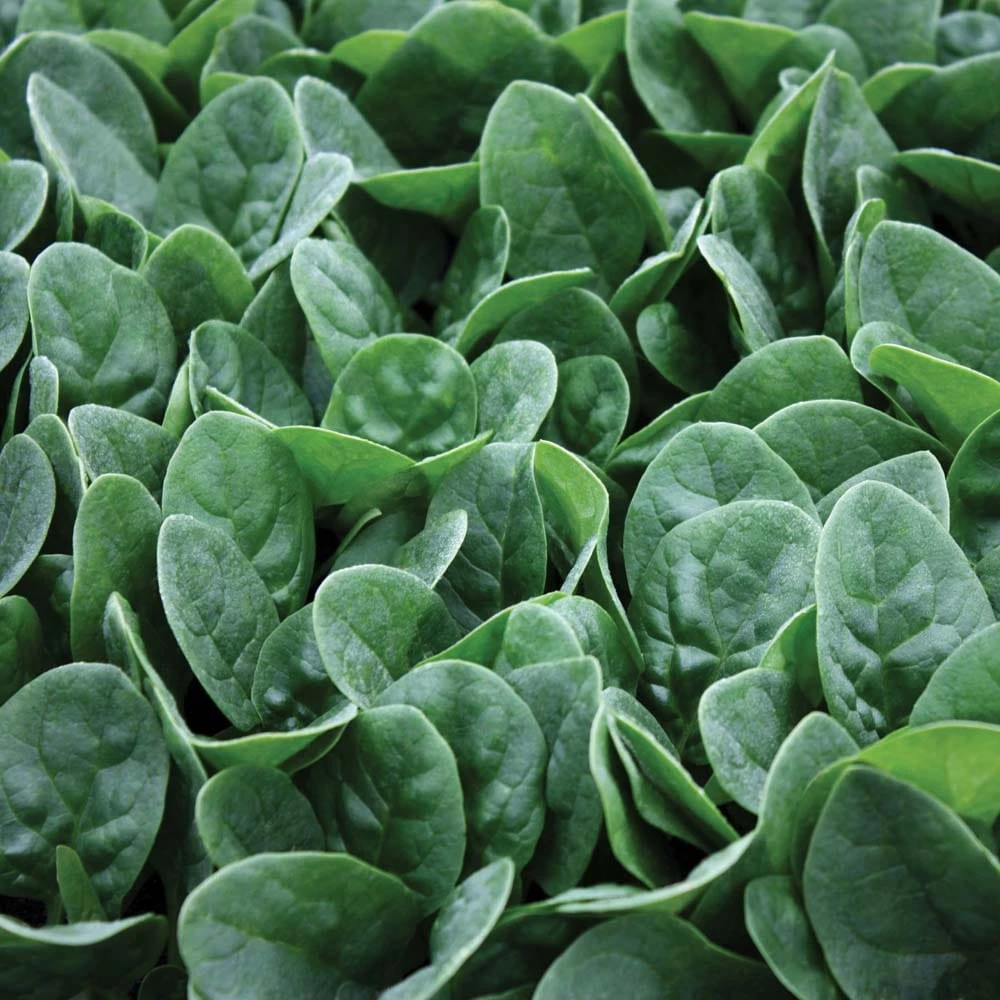
A heat tolerant, smooth-leafed spinach cultivar that will be as good for salads as it is for stir frys, in soup, or atop a pizza. Seaside is a very uniform, dark green, baby leaf spinach excellent for fast harvest and high-volume production. The leaves are thick and juicy, with well-developed flavour, and the nutritional value is legendary for a reason.

Contact Us | Privacy Policy | About Us
| Returns
Serving gardeners since 1992
State of Mississippi Seedmen's Permit #C-391, Ohio 90152, Minnesota 20086777